
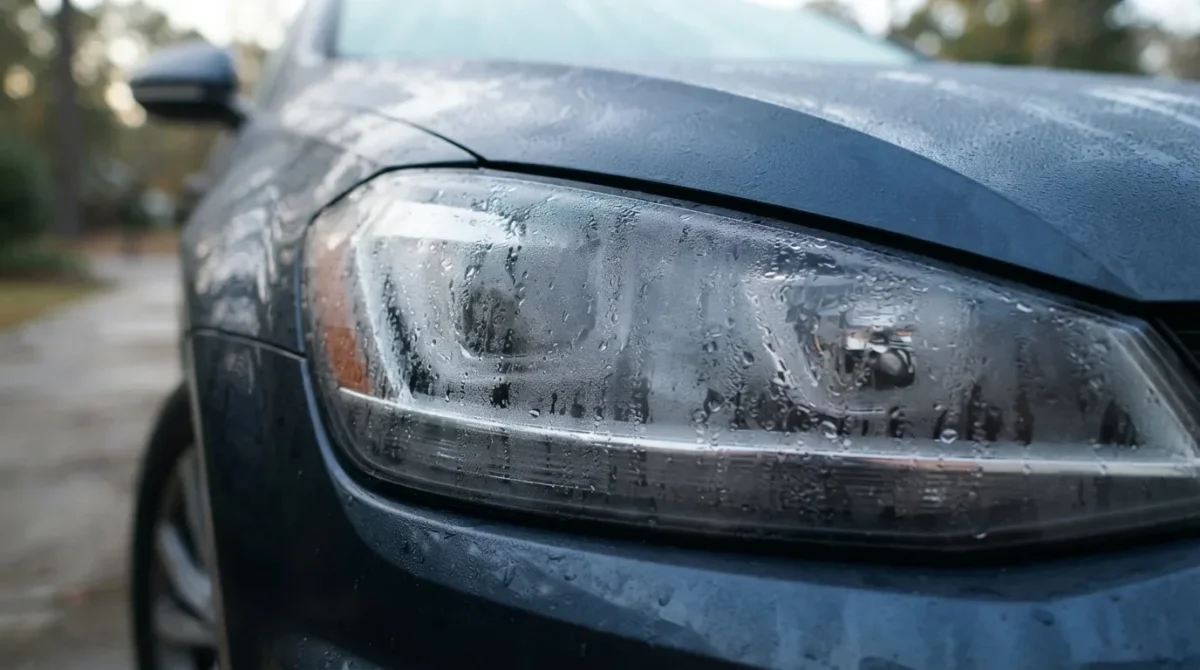

You walk out to your car on a cool morning and one of the headlights looks foggy from the inside. Sometimes there are even little drops of water sitting on the lens. It is a common sight, and it leaves a lot of drivers asking the same thing: why is there condensation inside my headlight, and is it a problem?
The answer depends on how much moisture you see and whether it goes away. A light haze is often normal. Droplets that never clear, or water pooling at the bottom, are not.
Why Headlights Get Condensation in the First Place
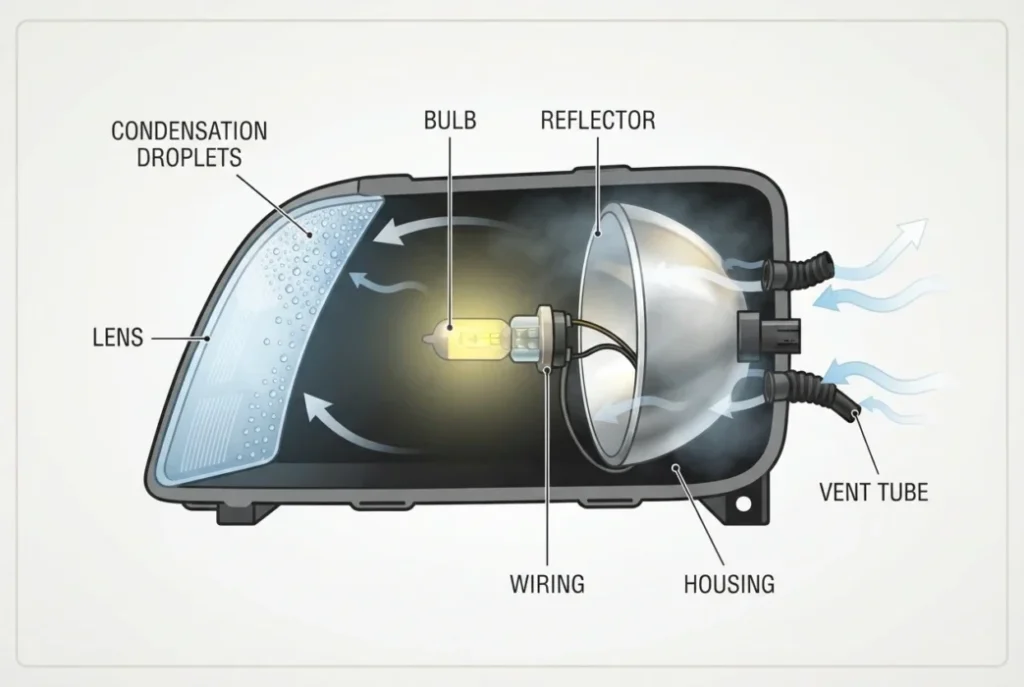
Most people assume headlights are completely sealed. They are not. Every headlight housing has small vents, usually rubber tubes or covered openings at the back. These let air move in and out as the housing heats up and cools down. Without them, the pressure changes would stress the seals and the lens.
The catch is that outside air carries moisture. When the inside of the housing cools faster than that air, for example overnight, after a rain shower or after a car wash, the moisture turns into a thin mist on the cold inner surface of the lens. It is the same thing that happens on a cold glass of water on a hot day.
Normal Condensation vs a Real Problem
Here is a quick way to tell the difference.
| What you see | What it usually means |
|---|---|
| Thin, even haze near the top or edges of the lens | Normal. It should clear on its own. |
| Haze that clears within about 20 to 30 minutes of driving with lights on | Normal venting at work. |
| Large droplets that stay for days | Too much moisture getting in. Check for a leak. |
| Water pooling at the bottom of the housing | A real leak. Fix it soon. |
| Condensation in one headlight only, every time | Something is wrong with that housing. |
Common Causes of Excess Moisture
If the fog does not clear or keeps coming back heavy, one of these is usually to blame:
- Worn or broken seal between the lens and the housing, very common on older cars
- Cracked lens or housing, sometimes from a stone chip or a small parking bump
- Missing or loose bulb cover at the back of the headlight
- Blocked or missing vent tubes
- Aftermarket bulbs whose fans or larger bases stop the rear cap from sealing properly
- Pressure washing directly at the edges of the headlight, which can force water past the seal
LED headlights tend to show condensation more than halogen ones. That is because LEDs give off much less heat toward the lens, so there is less warmth to burn the fog away once the lights are on.
Why You Should Not Ignore It
A little haze is harmless. Standing water is a different story. Over time, moisture inside a headlight can:
- Corrode the chrome reflector, which makes your beam weaker and blotchy
- Rust the bulb socket and connector pins
- Crack hot halogen bulbs when cold drops hit them
- Fry the electronics inside LED and HID units, which are costly to replace
If you have been replacing bulbs more often than you should, moisture could be part of the reason. We cover that and eight other causes in our post on why a headlight keeps burning out.
How to Get Rid of Condensation in a Headlight
For light to moderate moisture, try these steps first:
- Drive with the headlights on. Twenty to thirty minutes of warmth often clears normal haze.
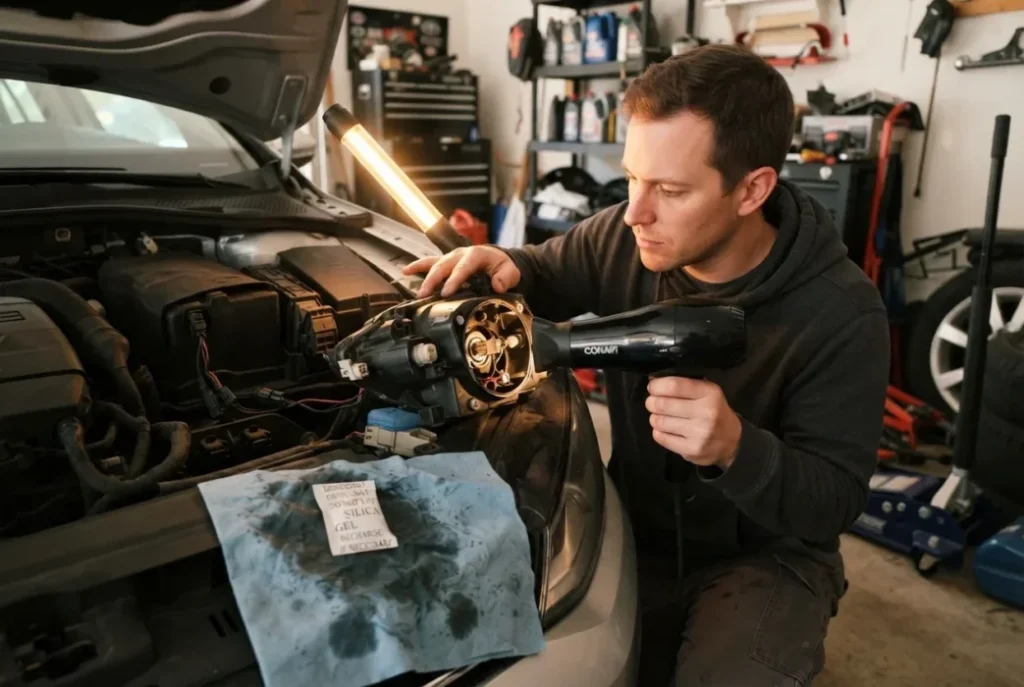
- Open the back of the housing. Remove the bulb cover in a dry, warm place and let air move through for a few hours.
- Use gentle heat. A hair dryer on its low setting aimed at the opening speeds things up. Avoid high heat, since it can warp plastic lenses.
- Add a moisture absorber. A small silica gel packet placed inside the housing for a day can pull out the last of the moisture. Remember to take it out before you close it up.
- Check the vents. Make sure the vent tubes are in place and not pinched or clogged with dirt.
If water keeps coming back after drying, the housing is leaking and needs to be sealed. Our step-by-step guide on how to reseal headlights shows how to do it at home.
When to Replace the Headlight Instead
Resealing works well for a tired seal. But if the lens or the housing is cracked, or the reflector inside is already peeling or rusted, a new headlight assembly is usually the better fix. Many cars have affordable aftermarket assemblies, and they will give you a brighter, cleaner beam. Some models have also had recalls for headlight water leaks, so check the NHTSA recall lookup before you pay for a repair.
FAQ
Is condensation in headlights normal?
A light haze that clears within about half an hour of driving is normal. Large droplets or standing water are not.
Will condensation in my headlight go away on its own?
Light condensation usually will. Heavy moisture tends to stay until you dry the housing and fix the leak.
Can condensation in a headlight fail an inspection?
It can if the moisture is bad enough to block or distort the beam, or if water has damaged the bulb or reflector. Rules vary by state.
Does condensation affect how well my headlights work?
Light haze has little effect. Heavy moisture scatters the light, reduces brightness and slowly damages the parts inside.
Final Thoughts
So why is there condensation inside my headlight? Usually it is just the vents doing their job. Keep an eye on how much moisture you see and how long it lasts. If it clears quickly, you are fine. If drops stick around or water collects at the bottom, dry it out and seal it before it turns into a bigger repair.
Leave a Reply