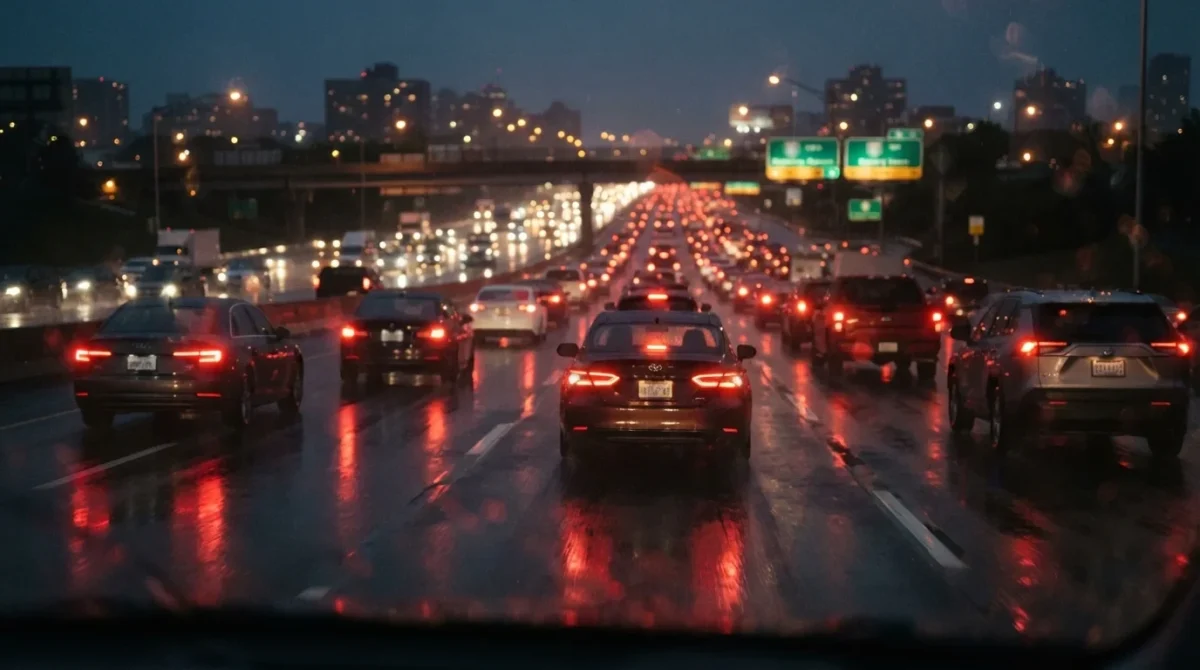

Every car on the road has red brake lights. Not blue, not green, not white. Most of us never stop to wonder why. But if you have ever asked “why are brake lights red,” the answer is a mix of human biology, physics, a little railroad history and some very specific federal rules.
Here is the full story in plain language.
Red Means Stop, and Our Brains Know It
Long before cars existed, red was already the color of warning. Railroads used red lamps and flags to signal trains to stop back in the 1800s. When traffic signals arrived in the early 1900s, they borrowed the same idea: red for stop.
So when cars started getting brake lights, red was the natural choice. Drivers already linked red with danger and stopping. That instant link is exactly what you want from a signal that has to be understood in a fraction of a second.
The Physics: Red Light Travels Well
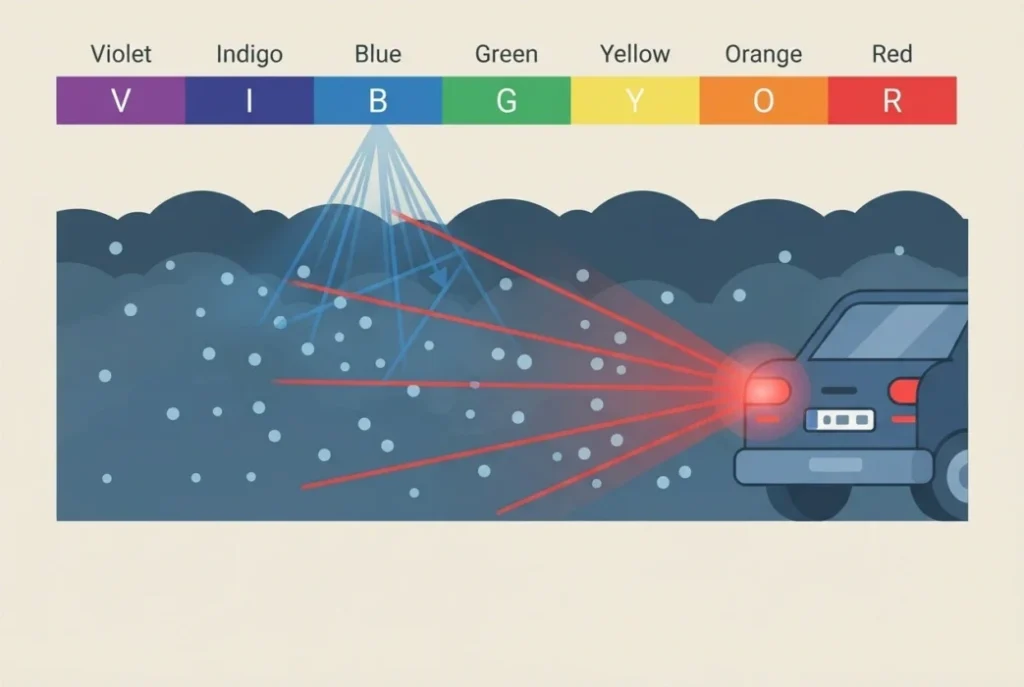
Light with longer wavelengths scatters less as it passes through the air. Red sits at the long end of the visible spectrum. That means a red light holds together better through haze, light fog, dust and rain than blue or violet light does.
Red also stands out against most daytime scenery, which is full of greens, greys and blues. And at night, red light does less to disturb your night vision than bright white light. That matters when you are staring at a line of brake lights for an hour in traffic.
What the Law Says About Brake Light Color
In the United States, vehicle lighting is governed by Federal Motor Vehicle Safety Standard 108, usually called FMVSS 108. It requires stop lamps, which is the official name for brake lights, to be red. Tail lamps must be red too.
That creates one consistent color language at the back of every car:
- Red: brake lights and tail lights
- Red or amber: rear turn signals (automakers can choose)
- White: reverse lights and license plate light
- Amber: front turn signals and front side markers
Commercial trucks are not allowed to use amber brake lights or amber tail lights at all. Most other countries follow similar rules through UN lighting regulations, so red brake lights are close to universal worldwide.
If you want the details on how many brake lights you need and how bright they must be, our guide to brake light requirements by state covers it.
How Your Car Tells Braking Apart From Just Driving
If brake lights and tail lights are both red, how do other drivers know when you are actually stopping? Two things do the work.
First, brightness. Brake lights are several times brighter than tail lights. When you press the pedal, the rear of the car suddenly gets much brighter, and that change grabs attention.
Second, the center high-mounted stop lamp. Since the 1986 model year, passenger cars sold in the US have needed a third brake light mounted high and in the middle. It sits right in the line of sight of the driver behind you, even when they are looking through other cars. You can read more about it in our post on the third brake light.
Why Not Other Colors?
Every other color already has a job, and mixing them up would cause confusion.
- White is for lighting the road ahead and for reversing. A white light at the back means “this car is backing up.”
- Amber means “pay attention” and is used for turn signals and hazard lights.
- Blue and flashing red are reserved for police and emergency vehicles in most places.
- Green means go, the exact opposite of a brake light.
Red is the only color that clearly says “I am slowing down” without any other meaning attached.
What About Tinted or Colored Brake Light Covers?
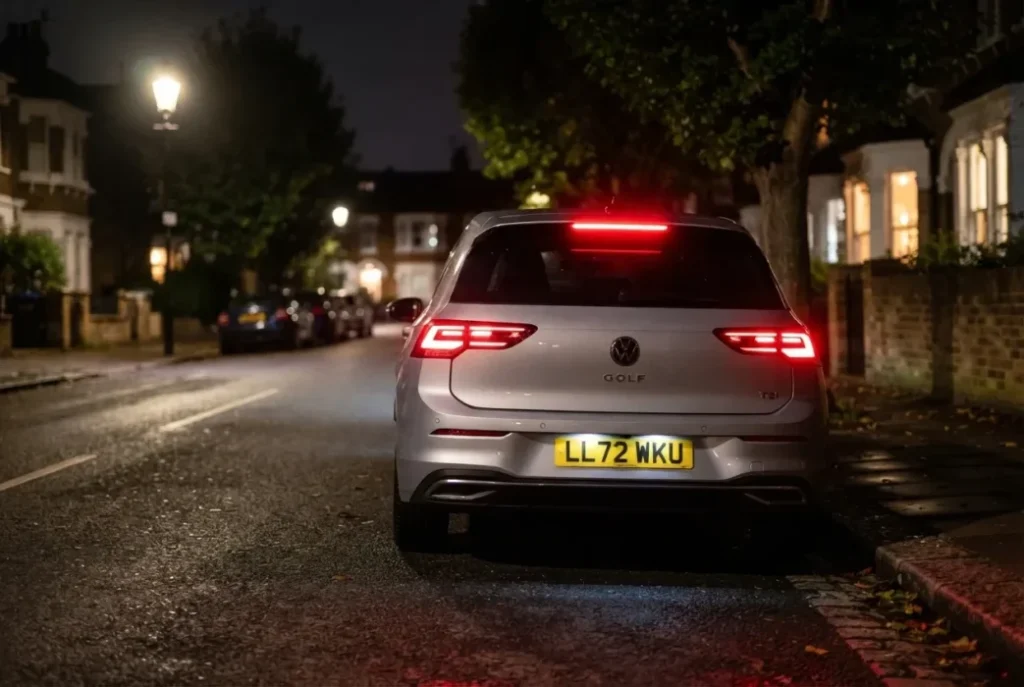
Smoked lenses, tinted films and colored bulbs are popular mods. The problem is that they can dim the light or change its color enough that your brake lights no longer meet the legal standard. That can earn you a ticket, fail an inspection and, more importantly, make it harder for the driver behind you to react in time.
If you want a different look, choose replacement lamps that are marked as compliant for road use rather than covering the originals.
FAQ
Are brake lights required to be red?
Yes. In the US, FMVSS 108 requires brake lights to be red, and most other countries have the same rule.
Why are some rear turn signals red and others amber?
US rules let automakers choose either color for rear turn signals. Many European and some newer US models use amber because it stands out better from the red brake and tail lights.
Are LED brake lights better than regular bulbs?
They light up faster. LEDs reach full brightness roughly 0.2 seconds sooner than a filament bulb. At 60 mph, that gives the driver behind you about 17 extra feet of warning.
Can I use blue or white brake lights?
No. Brake lights must be red to be road legal. Other colors can get you pulled over and fail inspection.
Final Thoughts
So why are brake lights red? Because red already meant stop, because red light cuts through bad weather well, and because the law makes sure every car speaks the same language. It is a simple choice that has quietly prevented countless rear-end crashes. The best thing you can do is keep yours bright, clean and working.
Leave a Reply