
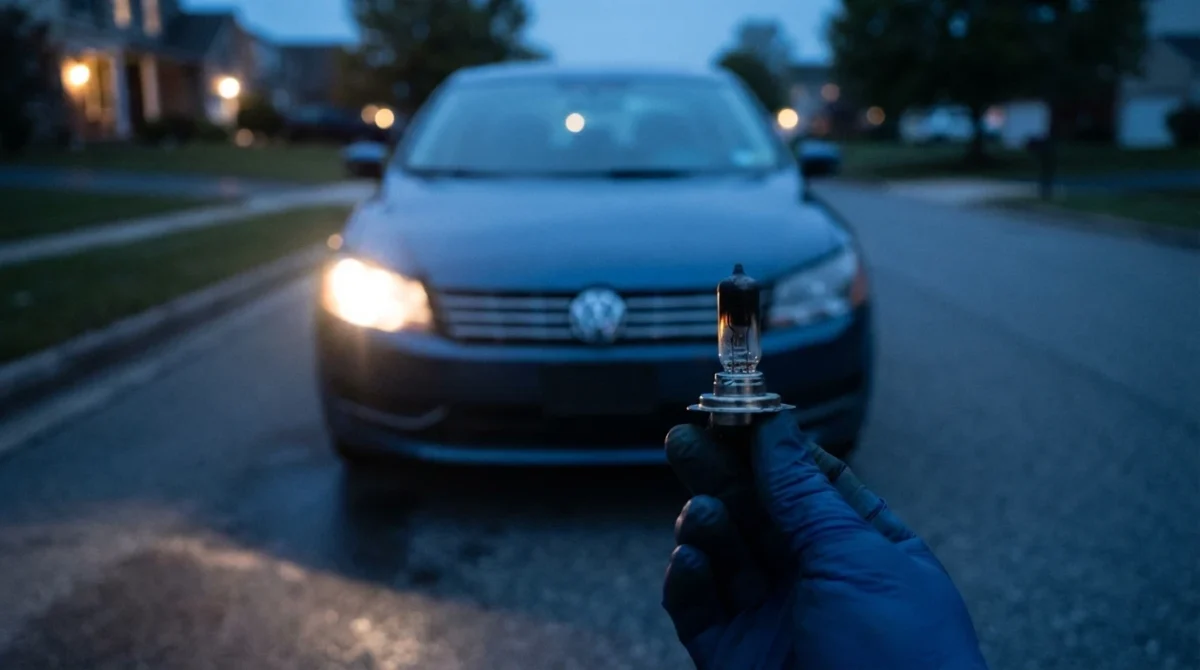

You swap in a new bulb, it works fine for a few weeks, and then that same side goes dark again. If you keep asking yourself “why does my headlight keep burning out,” here is the good news: the bulb is rarely the real problem. Something around the bulb is cutting its life short.
In this guide we will walk through the nine most common causes, how to spot which one you are dealing with, and what it takes to fix it so you stop buying bulbs every other month.
How Long Should a Headlight Bulb Actually Last?
Before blaming your car, it helps to know what normal looks like. Bulb life is measured in hours of use, not months.
- Standard halogen bulbs: around 450 to 1,000 hours
- HID (xenon) bulbs: around 2,000 to 3,000 hours
- LED bulbs: often rated for 20,000 hours or more, though heat can shorten that
If you drive about an hour a day with your lights on, a regular halogen bulb should give you one to two years. If yours is dying in a few weeks or a few months, something is wrong. And since bulbs are not free, it adds up fast. Our breakdown of the cost of headlight bulbs shows how quickly repeat replacements eat into your budget.
9 Reasons Your Headlight Keeps Burning Out
1. The Glass Was Touched During Installation
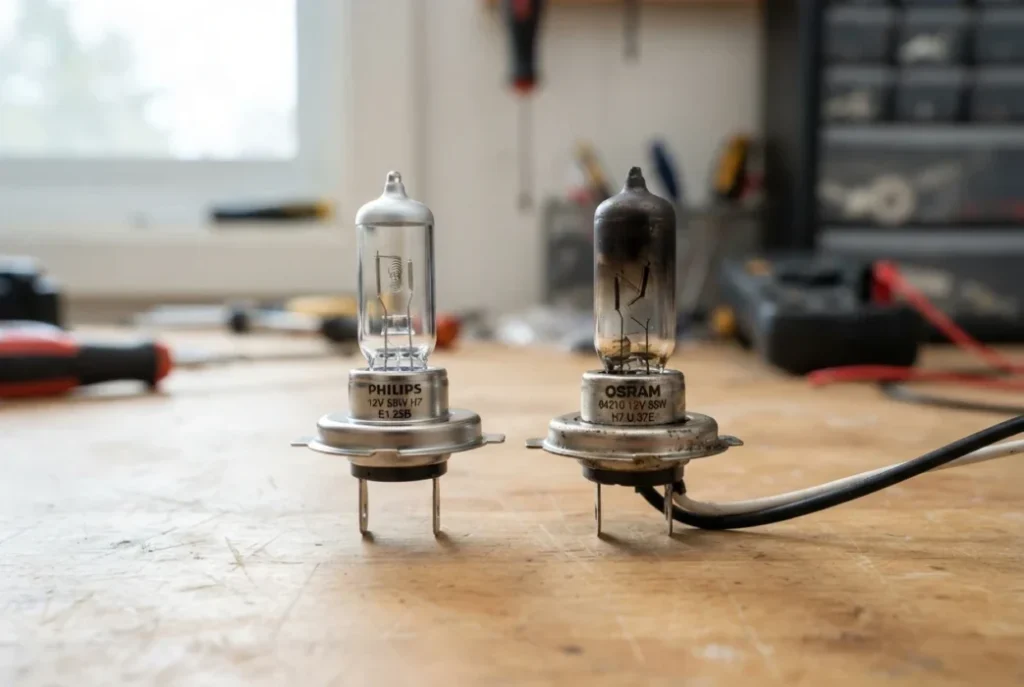
This is the most common cause with halogen bulbs. The oil from your fingers stays on the quartz glass. When the bulb heats up, that spot gets much hotter than the glass around it. The glass weakens, and the bulb fails early.
Fix: Hold new bulbs by the metal or plastic base only. Wear clean gloves if you can. If you do touch the glass, wipe it with rubbing alcohol on a lint-free cloth before you install it.
2. Your Charging System Is Sending Too Much Voltage
With the engine running, a healthy charging system holds somewhere between about 13.5 and 14.7 volts. A failing alternator or voltage regulator can push that higher. Halogen filaments are very sensitive to this. Running just a few percent over the rated voltage can cut bulb life roughly in half.
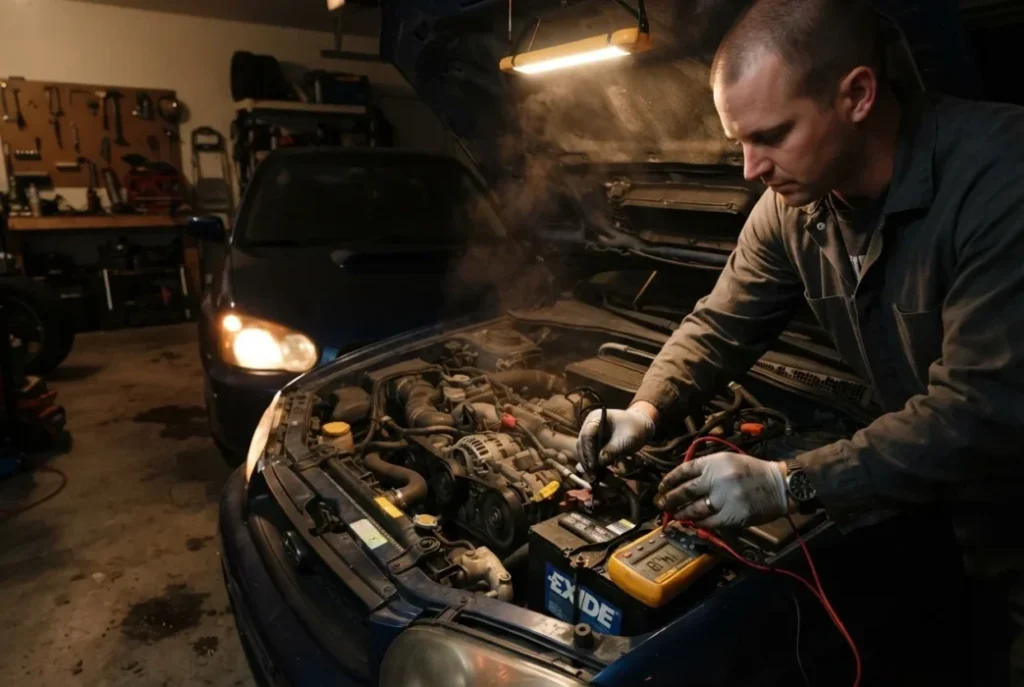
Fix: Test the voltage at the battery with a multimeter while the engine runs. If you see readings near 15 volts or higher, have the alternator and regulator checked. This one matters beyond headlights, because overcharging also damages the battery.
3. Moisture Inside the Headlight Housing
Water and a hot bulb do not mix. When droplets hit hot glass, the sudden temperature change can crack it or kill the filament. If you can see fog, droplets or a small puddle inside the lens, you have found a likely suspect.
Fix: Find where the water gets in. It is usually a worn seal, a missing bulb cover or a cracked housing. Our guide on how to reseal headlights walks through the repair step by step.
4. A Loose or Corroded Connector
A bulb needs a solid electrical connection. When the terminals are loose, dirty or corroded, resistance builds up. That creates extra heat and small voltage spikes every time the contact flickers. You might notice the light flickering over bumps before it finally dies.
Fix: Unplug the connector and look closely. Brown, black or melted plastic means heat damage. Clean light corrosion with electrical contact cleaner. A melted plug should be replaced with a new pigtail connector.
5. Vibration and a Bulb That Is Not Seated Properly
A hot filament is fragile. If the bulb is not fully locked into its retaining clip, or the headlight housing is loose on its mounts, every pothole shakes it. Over time, the filament snaps.
Fix: Make sure the bulb clicks firmly into place and the dust cap is on tight. Check that the headlight assembly does not move when you push on it. Broken mounting tabs are common after minor front-end bumps.
6. You Are Using High-Performance Bulbs
Those “extra bright” or “whiter light” halogen bulbs look great on the box. The catch is that they get their extra output by running the filament hotter. Some of them are rated for only a few hundred hours, a fraction of a standard bulb.
Fix: If long life matters more than maximum brightness, switch back to a standard or long-life version of your bulb size.
7. Low-Quality or Counterfeit Bulbs
Very cheap bulbs often have weaker filaments and poor glass. Counterfeit copies of big brands are also out there, especially on online marketplaces. They may look identical but fail much sooner.
Fix: Buy from a trusted parts store or an authorized seller, and keep the receipt in case you need a warranty claim.
8. Your Headlights Run Every Time You Drive
Some vehicles use the low beams as daytime running lights, or you may simply drive with your lights on all day. That is not a fault, but it means you rack up bulb hours much faster than someone who only uses headlights at night.
Fix: Nothing to repair here. Just expect shorter replacement intervals, or consider a long-life bulb.
9. The Wrong Bulb for the Housing
A bulb with a higher wattage than the housing was designed for runs hotter and can overheat the socket and wiring. An LED bulb crammed into a tight housing with no room for its heat sink can cook itself too.
Fix: Check your owner’s manual for the correct bulb size and wattage, and stick with it unless you are doing a proper, legal upgrade.
How to Find Out Why Your Headlight Keeps Burning Out
Work through these quick checks in order. Most people find the answer within the first three.
- Look at the dead bulb. Blackened or cloudy glass points to overheating or contamination. A cleanly broken filament usually means vibration or normal age. A browned or melted base points to the connector.
- Check the lens for moisture. Look for fog, droplets or water marks inside the headlight.
- Test the voltage. With the engine running at about 2,000 rpm, a reading above roughly 14.8 volts suggests a charging problem.
- Do a wiggle test. With the lights on, gently move the connector behind the headlight. If the light flickers, the connection is bad.
- Notice which side fails. If it is always the same side, focus on that socket, connector and housing.
When to Call a Mechanic
If your voltage readings are high, if a connector keeps melting, or if both headlights fail at the same time, get a professional to look at the wiring and charging system. These are not problems a new bulb can fix. It is also worth checking for open recalls on your vehicle with the NHTSA recall lookup, since some models have had headlight wiring recalls. If you have a question about your specific vehicle, you can also reach us through our contact page.
FAQ
Is it normal for a headlight to burn out every few months?
No. A standard halogen bulb should last a year or more for most drivers. Failing every few months points to a cause like voltage, moisture or a bad connection.
Can a bad alternator make headlights burn out?
Yes. An alternator or regulator that overcharges the system sends extra voltage to the bulbs, which shortens their life quickly.
Why does only one headlight keep burning out?
When it is always the same side, the problem is usually local to that side. Think moisture in that housing, a loose bulb or a damaged connector.
Will switching to LED bulbs stop the problem?
Sometimes. LEDs have no filament, so vibration is less of an issue. But they still fail if they overheat, and they will not fix a wiring or charging fault. Make sure any LED upgrade is legal for road use where you live.
Final Thoughts
If you have been asking “why does my headlight keep burning out,” treat it as your car telling you something. In most cases it is a simple fix like handling the bulb correctly, sealing out water or replacing a tired connector. Find the cause once and your next bulb should last the way it was meant to.
Leave a Reply