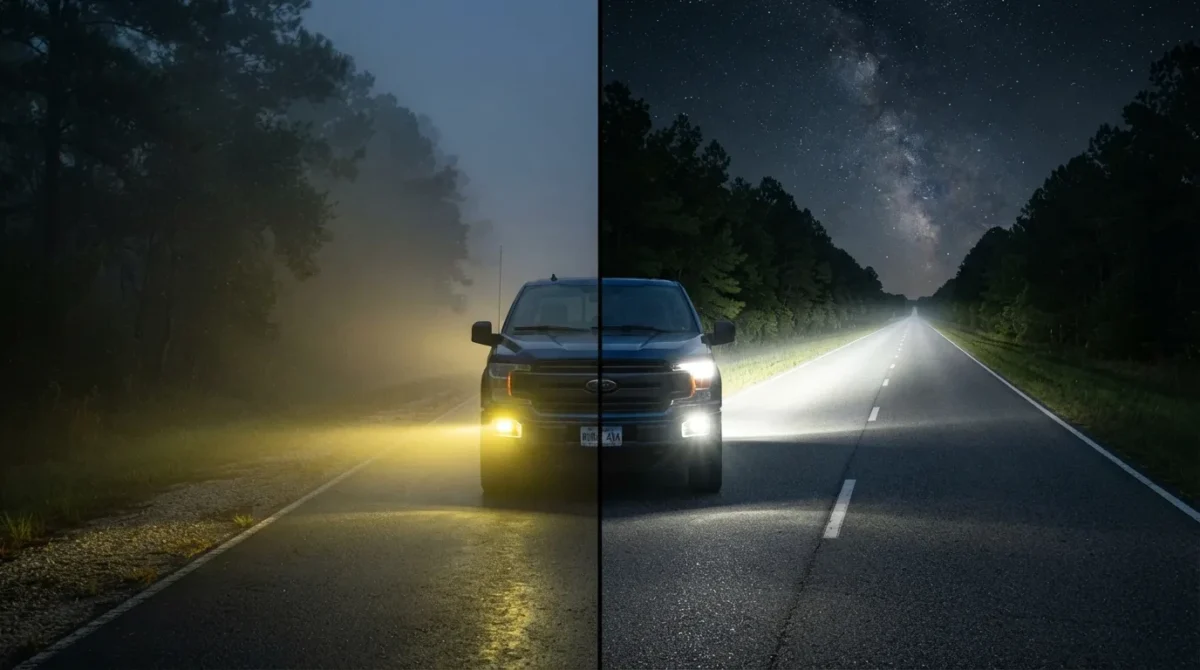

They both sit near the front bumper, they both add extra light, and plenty of people use the names as if they mean the same thing. They do not. If you have been wondering what is the difference between fog lights and driving lights, the short answer is this: fog lights help you see close up in bad weather, while driving lights help you see far ahead on clear, dark roads.
Using the wrong one at the wrong time can actually make visibility worse, so it is worth knowing how each works.
What Fog Lights Do
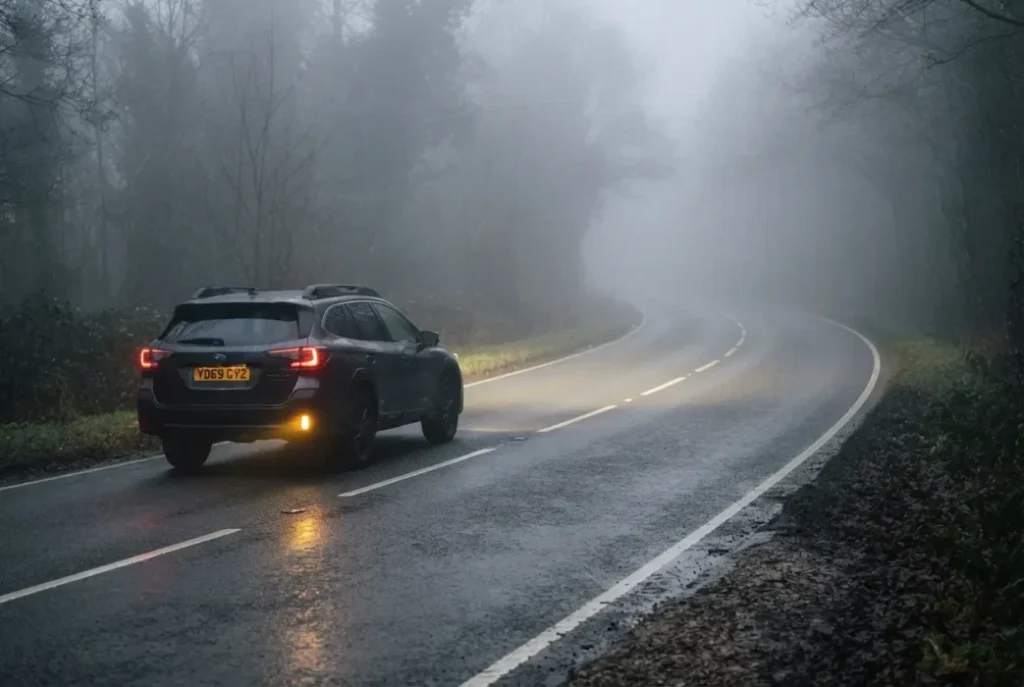
Fog lights are built for fog, heavy rain and snow. In those conditions, your regular headlights bounce off water droplets in the air and reflect glare right back at you. Fog lights solve that by sending a low, wide, flat beam along the road surface, underneath most of the fog.
Key traits of fog lights:
- Mounted low on the bumper, close to the ground
- Wide, short beam with a sharp flat top cutoff
- Light the edges of the road and the lane markings just ahead of the car
- Usually white or selective yellow
If you want to go deeper into fog light basics, our guide on what fog lights on a car are for is a good next read.
What Driving Lights Do
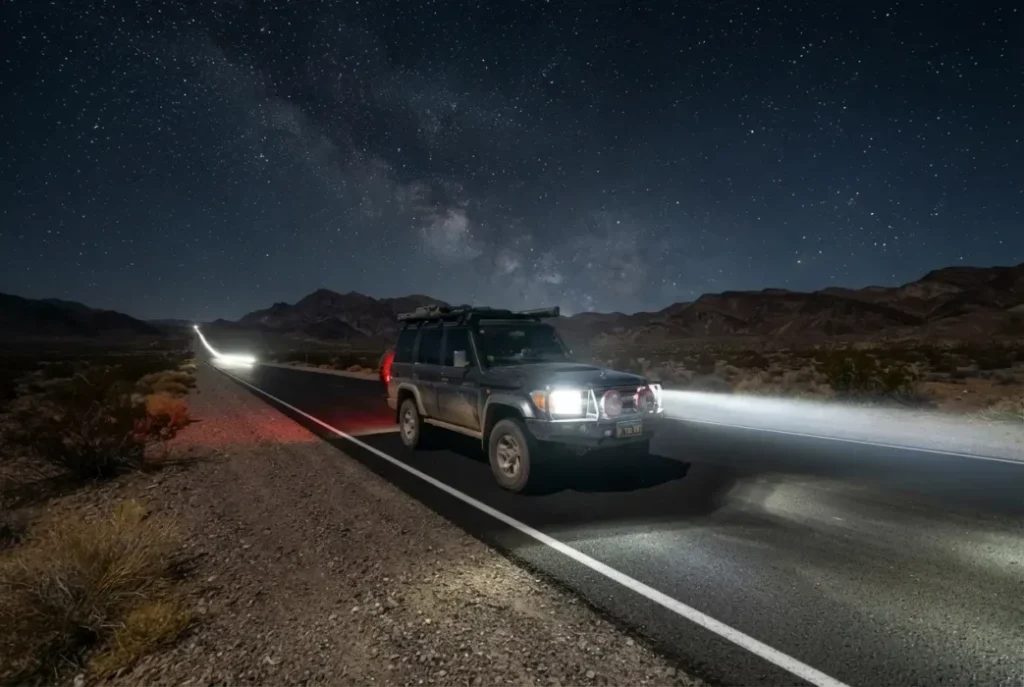
Driving lights, sometimes called auxiliary high beams or spot lights, work the opposite way. They throw a narrow, intense beam far down the road to add distance to your high beams. They are popular on trucks, off-road vehicles and cars that see a lot of rural night driving.
Key traits of driving lights:
- Mounted at or near headlight height, often on the bumper or a light bar
- Narrow, long-reaching beam with no low cutoff
- Designed to be used together with your high beams
- Almost always white
Because they shine so far and so bright, driving lights will blind oncoming drivers. They should go off whenever you dim your high beams.
Fog Lights vs Driving Lights at a Glance
| Feature | Fog lights | Driving lights |
|---|---|---|
| Main purpose | See the road close up in bad weather | See farther on clear, dark roads |
| Beam shape | Wide, flat, short with a sharp cutoff | Narrow, long and focused |
| Mounting height | Low on the bumper | At or near headlight height |
| Use with | Low beams | High beams |
| Best conditions | Fog, heavy rain, snow | Empty rural roads at night |
| Use with oncoming traffic | Yes, at normal settings | No, switch off |
| Common colors | White or selective yellow | White |
When to Use Each One
Use fog lights when: visibility is poor because of fog, heavy rain, falling snow or dust. Turn on your low beams with them, never your high beams. High beams light up the fog itself and make glare worse.
Use driving lights when: you are on a dark road with no oncoming traffic and no car close in front of you, and you already have your high beams on.
Use neither when: the weather is clear and you are in town or in traffic. Leaving fog lights on in clear weather adds glare for other drivers and, in some places, can get you a ticket.
A common question is whether yellow fog lights work better than white ones. Selective yellow can reduce glare for some drivers in fog, though the difference is smaller than many people expect. We break that down in our post on whether yellow fog lights are better.
Are Fog Lights and Driving Lights Legal?
Both are legal in the US when they meet road lighting standards and are used correctly. Rules vary by state, but common ones include:
- Limits on how many auxiliary lamps you can have on at once, often two fog lamps and two driving lamps
- Driving lights must be turned off or dimmed for oncoming traffic, just like high beams
- Fog lights must be aimed low so they do not glare into other drivers’ eyes
Aftermarket lights should carry a DOT or SAE marking showing they meet FMVSS 108, the federal vehicle lighting standard. Unmarked off-road lights may need to be covered or switched off on public roads.
What About Rear Fog Lights?
Some cars, especially European models, also have a single bright red rear fog light. It makes your car easier to see from behind in thick fog. It is a completely different light from the front fog lights covered here, and it should only be used when visibility is very low.
FAQ
Can I use fog lights instead of headlights?
No. Fog lights only light a short, wide area in front of the car. Use them together with your low beams, not instead of them.
Are driving lights the same as high beams?
They are an addition to high beams. They extend how far your high beams can reach and should only be used with them.
Can I replace my fog lights with driving lights?
You can, but you will lose the low, wide beam that helps in bad weather. Many drivers keep fog lights on the bumper and add driving lights higher up.
Why are my fog lights so dim?
That is mostly by design. Fog lights are meant to light the road close to the car, not to reach far. A heavily faded lens or an old bulb can also reduce output.
Final Thoughts
So what is the difference between fog lights and driving lights? They solve opposite problems. Fog lights stay low and wide for bad weather, and driving lights reach long and narrow for clear, empty roads. Use each one only where it belongs, and you will see better without blinding anyone else on the road.
Leave a Reply